
Potty and crate
Potty training and a crate that means rest.
A rhythm for going outside, supervision between trips, and a crate used for sleep rather than as a penalty.

Who this is for
Households teaching a puppy where to toilet, and households restarting house training with an adult dog after a move, a change in schedule, or a medical check. If accidents started suddenly in a dog who was reliable, call a veterinarian before you call it a training failure.
A practical potty rhythm
Puppies toilet after waking, after eating, after play, and at an interval you learn by watching. Take the puppy to the same outdoor spot, wait, and pay the moment the puppy finishes there. Between trips, the puppy is with you on a leash in the house, in a small puppy-proof area, or resting. Freedom of the whole house is how rugs get chosen as a bathroom.
Accidents are information. Clean them without a performance. Punishment after the fact teaches the dog to hide, not to hold it. A puppy who is mid-squat can be carried outside if you catch the start. A puppy who finished ten minutes ago cannot connect a scolding to the puddle.
Crate training without turning the crate into a threat
A crate can be a bedroom: short, successful sessions, a chew that is safe for that dog, and a door that closes only when the dog can be quiet enough to rest. Feed meals near it. Toss treats in and let the dog come back out. Lengthen the stay when the dog is already relaxed. A crate is the wrong tool for a dog who panics in it, and it is the wrong tool for all-day storage of a young puppy. Plan on real trips outside. Night waking is normal at first.
The puppy guide puts this rhythm next to naps and biting. Puppy training covers the skills around it.
What to prepare
An enzymatic cleaner, a leash for indoor supervision, a crate that lets the dog stand and turn, and a notebook of times for a few days. The pattern is more useful than a theory. Write it in the inquiry if you want help adjusting the schedule to your actual day.
Limits
No page can promise a puppy will be dry by eight weeks or twelve. Health, size, and consistency change the clock. This is guidance and coaching, not a medical treatment for incontinence.
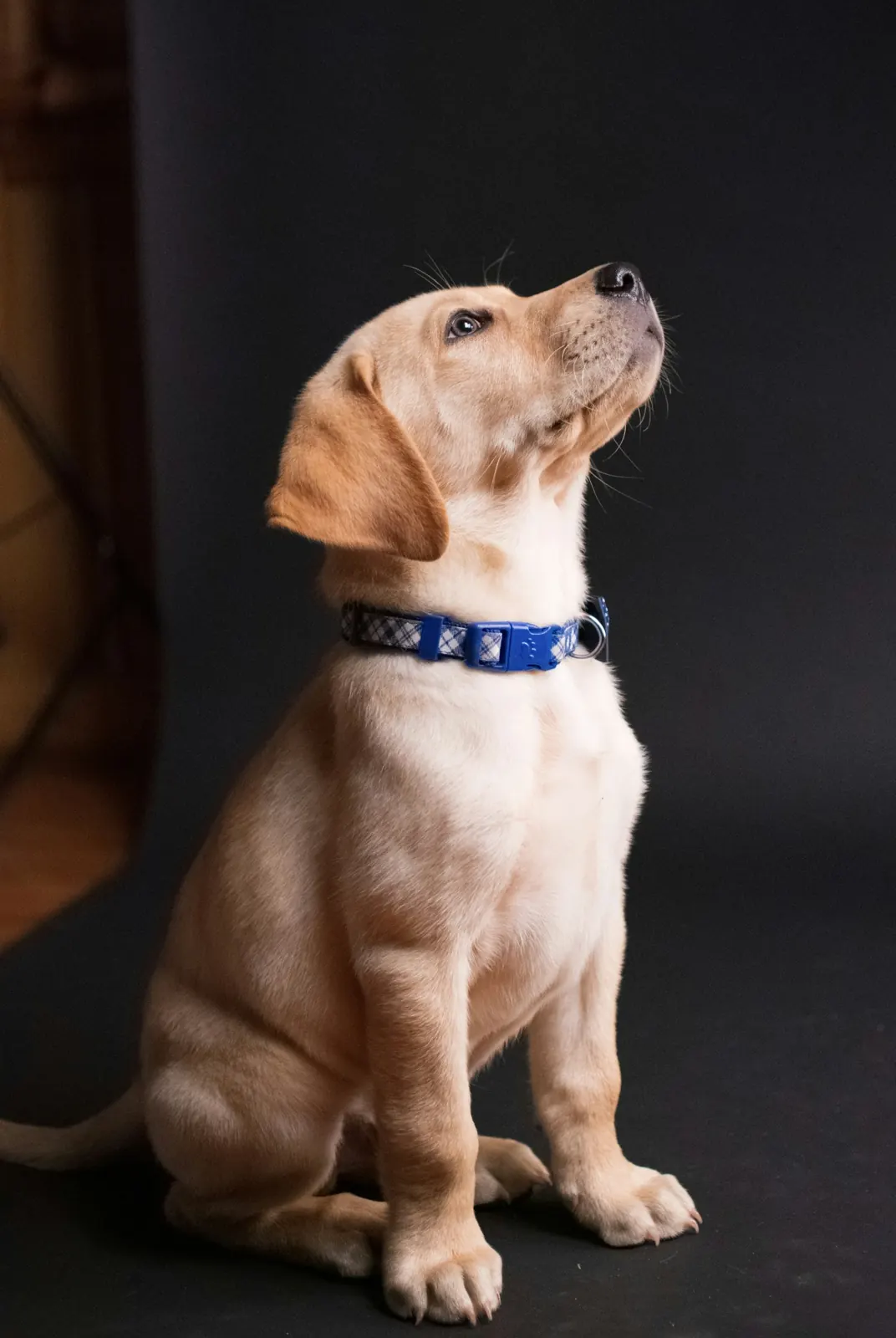
A simple daytime loop
- Wake, go straight outside, reward the outdoor finish.
- Play or train for a few minutes.
- Water and a short trip out again.
- Nap in the crate or a pen before the next cycle.
Night is the same idea with fewer steps and more sleep. If crying in the crate is panic rather than a need to toilet, stop and get advice before you lengthen the time.
Questions
About potty and crate work
My adult dog suddenly started having accidents. Is that a training problem?
Start with a veterinarian. A dog who was reliable and then was not may be ill. Training does not diagnose that.
Is the crate a punishment?
No. On this page the crate is a rest place: short successful sessions, a safe chew, and a door that closes only when the dog can settle. It is the wrong tool for a dog who panics in it.
Will the puppy be house-trained by a set age?
No. Size, health, and how consistently you take the puppy out all change the clock. The page describes a rhythm, not a deadline.
Ask whether this fits.
Tell us the dog's age and whether the accidents are overnight, after naps, or whenever the puppy is loose in the house.