
Reactivity
Help for leash reactivity, with a clear limit.
Barking and lunging on a leash can be worked on with distance and handler skill. This is not a promise to fix aggression.
Who this is for
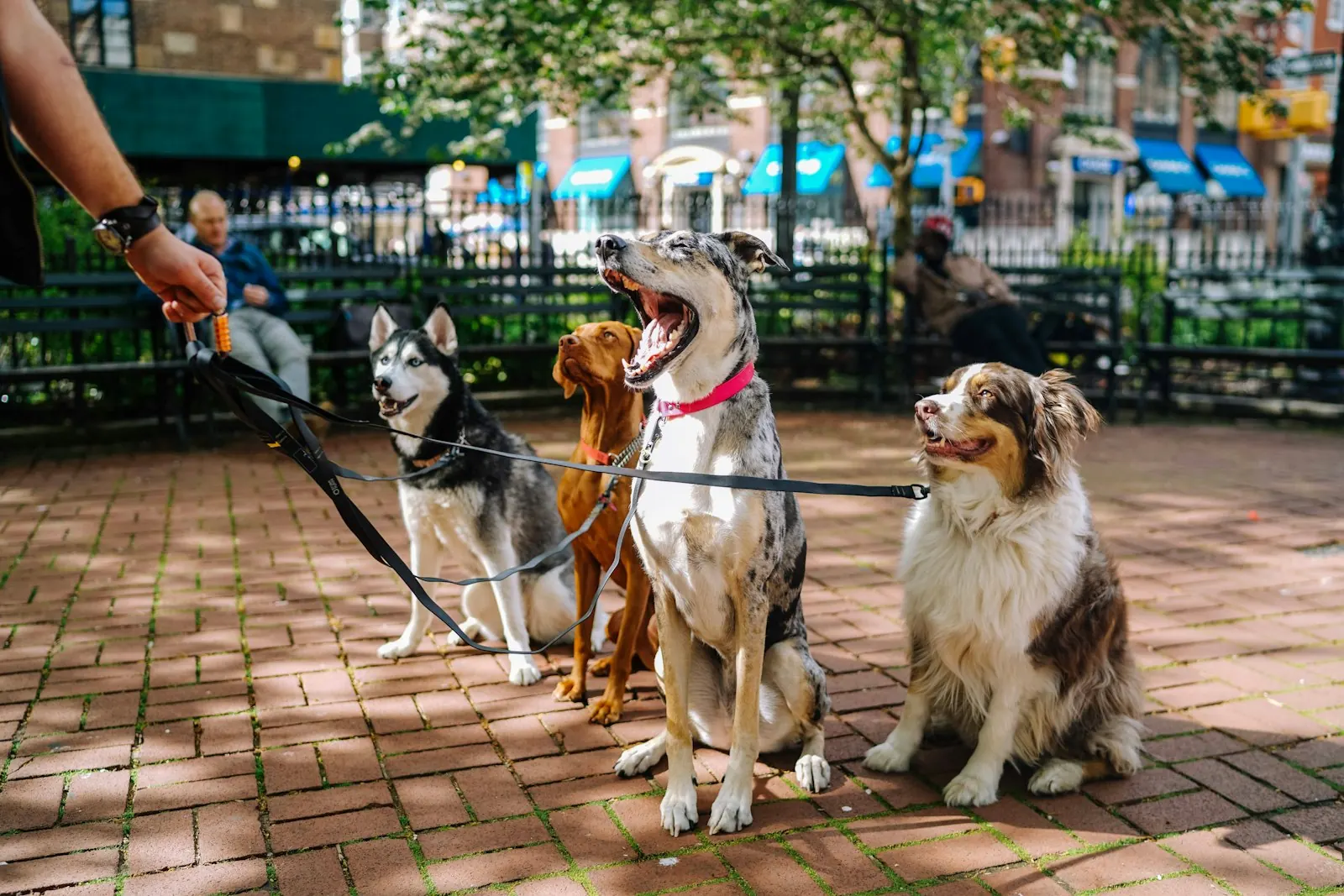
This page is for handlers whose dog barks, lunges, or freezes when a person, dog, or vehicle appears, especially on leash. The goal is a walk the handler can manage: more distance, an earlier decision, and a dog who can take food or look back before the explosion. It is also for people who have been told to "correct it harder" and want a different description of the work.
What sessions can cover
Observation comes first. Where does the dog notice the trigger, and where does the dog stop thinking? Practice starts at a distance where the dog can still eat, look, and move. The handler learns a way to create space, a marker for the glance back, and a plan for the narrow sidewalk that does not allow that distance. Equipment already in the house, used safely, is discussed. This site does not prescribe tools that cause pain.
Leash skills from the leash and recall page matter here, because a tight line and a late turn make reactivity louder. Obedience cues are useful only when the dog is under threshold. Asking for a sit while a dog is screaming is not the plan.
Aggression, anxiety, and veterinary care
Training can support behavior change. It does not cure aggression, and it does not replace a veterinarian. Bite history, injuries, panic, or a sudden change in temperament should be seen by a veterinarian, and often by a veterinary behaviorist, before anyone treats it as a training puzzle. Separation anxiety is not a service on this site. If the dog panics when left alone, say that in the inquiry so the reply can point you toward medical and behavior help instead of pretending a leash lesson covers it.
What to prepare
A short account of what the dog does, who gets hurt or frightened, and what you have already tried. Note the tightest place you have to walk. Do not stage a confrontation to film it. A reply can say whether coaching is appropriate or whether a veterinarian should come first. Sending the form does not book a session.
Read the FAQ on safety and the contact form if you want to ask. Do not expect a same-day overhaul.
A safety note you can use today
Cross the street early. Skip the crowded block. Use a car to reach a quieter start if you must. Management is not giving up. It is how you stop the rehearsal while a plan is being written.
Questions
About reactivity
Can you stop aggression?
No. This work is distance, handler skill, and a walk you can manage. It does not cure aggression and it does not replace a veterinarian or a veterinary behaviorist.
What if the dog has bitten?
Say so in the inquiry, including whether skin was broken. Injury, panic, or a sudden change belongs with a veterinarian first. A training conversation may not be the right next step.
Can we do this online?
No. Stillfern does not offer remote lessons. You can still call, email, or send the form to ask whether coaching is appropriate.
Ask whether this fits.
Describe what the dog does on leash and whether anyone has been bitten. That honesty decides whether training is even the right next call.